In the modern day’s pharmaceutical business, data is the basis for almost all vital business selections. Companies rely on information for many key decisions, including API supplier selection, licensing opportunities, market entry, product demand forecasting, and more.
But one issue that can remain unnoticed until too late is that of poor data.
Many pharmaceutical companies take the easy way out and believe that they have an overwhelming amount of information, and they make good choices. In fact, wrong, obsolete, incomplete, or poorly validated information can undoubtedly pose huge business hazards. The risks are not always apparent until they lead to lost revenue, unsuccessful investments, sourcing failures, or even missed market opportunities.
Pharma is a very competitive and regulated environment, with even minor errors potentially having significant impacts. Hence, the need for good market research data and a good pharma data provider is more crucial than ever.
How to Survive with Bad Pharma Data?
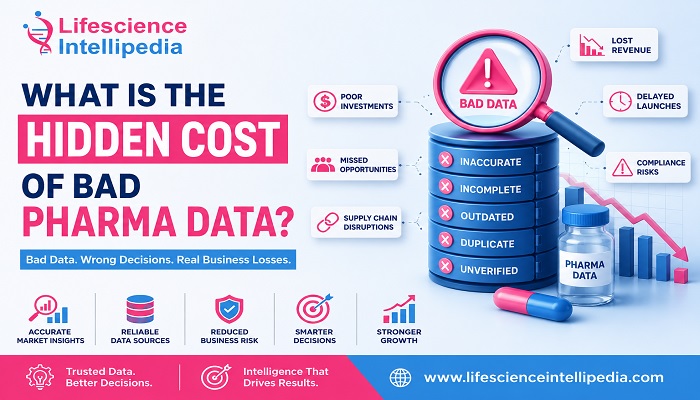
Bad pharma data is data that is inaccurate, outdated, incomplete, duplicated, or not reliable.
This may involve the pharmaceutical industry, such as:
- Outdated market forecasts
- The data is presented incorrectly by the API manufacturer.
- Incomplete supplier intelligence
- Missing competitive insights
- Obsolete regulatory information
- Inaccurate clinical pipeline data
- Unauthorized reports from the market
Often the problem is not immediately recognizable. A company can make informed decisions using the information it has to hand, but later, find out that the information it used was inaccurate.
Information may be current when it was published but six months may have passed and pharmaceutical markets change rapidly.
The Costs of Inadequate Market Research Data
Inaccuracies in data have far-reaching implications beyond just the simple report issue. Poor information has a direct impact on strategic decisions in many instances.
Poor Investment Decisions
There is risk associated with all pharmaceutical investments. From expanding manufacturing capacity to new therapeutic areas exploration and evaluation of a licensing opportunity, it is all about the accurate understanding of market conditions for the company’s success.
If companies use wrong market information data, they might:
- Overestimate market demand
- Underestimate competitive pressure
- Misjudge pricing opportunities
- Purchase when prices are low.Buy in low markets.
- Miss out the emerging growth areas!
Such errors can result in big losses and lower ROI.
Failed Market Entry Strategies
It can be seen that a new pharmaceutical market is a challenging market to enter, the process of which takes a lot of research and planning.
Companies must understand:
- Market size
- Competitive landscape
- Regulatory requirements
- Pricing structures
- Customer demand
With poor data, any of these assumptions can go wrong and lead to failure to enter the market.
For instance, a business might set up a business in a particular area with a growth trend, but find that there are already competitors in that market, or that the regulations are more stringent than originally anticipated.
Missed Growth Opportunities
The opportunity cost is one of the more costly costs of bad data.
Without visibility of the evolving trends, businesses may miss on the opportunities to grow and do so successfully.
This can lead to missed opportunities in relation to:
- API manufacturing
- Biosimilars
- Specialty pharmaceuticals
- Rare disease therapies
- Licensing partnerships
- Geographic expansion
Timing can be the difference maker in very competitive markets. You don’t want to miss it this time, because you can’t get it back.
The Consequences of Bad Data on a Pharmaceutical Supply Chain
Data quality is also important in the area of supply chain.
Supplier intelligence is essential for pharmaceutical companies to maintain continuity, compliance, and product quality.
If supplier’s details are inaccurate or missing, there are a number of problems for the organization.
Supplier Selection Risks
A poor choice of supplier can lead to operational and financial challenges.
If your company doesn’t have reliable supplier intelligence, it may have trouble determining:
- Manufacturing capabilities
- Regulatory compliance history
- Production capacity
- Geographic risks
- Product quality standards
Bad supplier choices can result in delayed orders, stock-outs and higher procurement expenses.
API Sourcing Challenges
The global API market is getting complicated.
Pharmaceutical companies need to keep track of:
- Manufacturer availability
- Pricing trends
- Production shifts
- Regulatory developments
When it comes to sourcing, businesses rely on accurate intelligence to be able to find reliable partners and to reduce risks throughout the supply chain.
The Competitive Intelligence Challenge
The pharmaceuticals industry is a fiercely competitive one.
To gain a comprehensive understanding of competitors, organisations need to keep an eye on them:
- Product launches
- Clinical developments
- Licensing activity
- Market expansion strategies
- Pricing movements
Incomplete or outdated CI can lead to actions based on assumptions, not facts.
This can affect:
- Product positioning
- Investment planning
- Business development activities
- Commercial strategy
Good intelligence can help companies predict market fluctuations and adapt accordingly.
The Importance of Data from Market Research
Good market research information is key to support improved decision making throughout the organisation.
Instead of guesswork, businesses can take decisions based on evidence and analysis.
Better Demand Forecasting
Organizations can make better predictions about future needs with accurate market intelligence.
This supports:
- Production planning
- Inventory management
- Resource allocation
- Investment decisions
Improved Market Sizing
True sizing and understanding the growth potential of a market is critical to assessing opportunities.
Companies are able to concentrate on those areas with the highest commercial potential when they have reliable data.
Stronger Competitive Benchmarking
Good intelligence gives a business insight into competitor activity, so that it can see where the opportunities lie and what sets itself apart from the competition.
Reduced Strategic Risk
More importantly, the reliability of data decreases uncertainty.
With reliable intelligence, companies are in a position to assess opportunities more confidently.
The Role of a Trusted Pharma Database Provider
Organizations need structured intelligence, not fragmented intelligence sources as the pharmaceutical market becomes more complex.
A trusted pharma database provider comes in handy here.
The modern pharmaceutical database gives easy access to vital business intelligence.
Manufacturer Intelligence
Organizations can get detailed information about:
- API manufacturers
- Production capabilities
- Product portfolios
- Geographic presence
This facilitates the sourcing, procurement and strategic planning processes.
The Product is Clinical and Pipeline Intelligence
Clinical trial and pipeline information enables companies to track innovations and opportunities that lie ahead.
This is particularly valuable for:
- Business development teams
- Licensing professionals
- Strategy teams
- Investors
Regulatory Intelligence
The rules governing pharmaceuticals are continually changing around the world.
Database driven regulatory intelligence supports organisations to keep up to date on:
- Approval pathways
- Compliance requirements
- Market access conditions
Competitive Intelligence
With structured databases, businesses can more effectively track competitors and detect threats and opportunities in the marketplace.
To sum up, a dependable pharma database supplier could facilitate the change of information into actionable intelligence.
How Pharmaceutical Companies Can Avoid the Cost of Bad Data
Poor quality data can only be avoided through a proactive approach.
Tell the Truth from Trusted Intelligence Sources
The information that companies rely on needs to come from trusted industry databases and good sources of market intelligence, not from individual bits of public information.
Validate Information Regularly
Markets change quickly. Up-to-date information enables informed decisions.
Use Multiple Intelligence Sources to combine.
The best ideas are often created by synthesizing:
- Market research
- Competitive intelligence
- Supplier intelligence
- Regulatory intelligence
Get ready for Data Quality
Companies with a focus on data quality are better positioned to make accurate predictions, spot growth opportunities and mitigate risk.
Ensure you are working with Specialized Intelligence Providers
Intelligence providers with experience in an industry can provide expertise and validated datasets which can be challenging to develop internally.
How Lifescience Intellipedia Supports Data-Driven Decision-Making
Lifescience Intellipedia can be used to support this data-driven decision-making process.Lifescience Intellipedia can help with this data-driven decision-making process.
High-quality data is essential for pharmaceutical companies looking for reliable intelligence.
Lifescience Intellipedia helps organizations by means of:
- Market research data
- Pharma database services
- API landscape insights
- Competitive intelligence
- Supplier intelligence
- Regulatory intelligence
- Strategic market analysis
Industry knowledge and intelligent structures can help pharmaceutical companies make sound decisions and reduce risk.
Conclusion
Bad pharma data can have a cost which is frequently not what organisations appreciate. Mistakes can impact on investments, sourcing, market expansion, licensing and competitive positioning.
In a business where choices are made on a huge level of monetary and operational investment, having a reliable intelligence is not an option.
Quality Market research information enables companies to realize market dynamics, gauge opportunities, and minimize uncertainty. In the meantime, a trusted pharma database provider enables structured intelligence to fuel strategic growth.
For companies aiming to navigate the complexities of a competitive pharmaceutical landscape, investing in reliable data is essential for uncovering opportunities, managing risks, and ensuring continued success.
Frequently Asked Questions
What’s bad pharma data?
Bad pharma data is inaccurate, outdated, incomplete or unreliable data that can negatively impact business decisions within the pharmaceutical industry.
What is the relevance of Market Research Data in Pharma?
Market research data can be used to help understand market trends, evaluate market opportunities, forecast demand, and help avoid business risks.
What can a pharma database provider do to assist pharma companies?
A pharma database provider provides structured intelligence on competitors, regulations, clinical trials, pharma manufacturers and market opportunities.
What are the issues surrounding old medicines information?
Seeking out old data can lead to poor investments, issues with sourcing, incorrect market entry plans, and lost growth opportunities.
What are some ways companies can enhance their data quality?
Organizations can get better data quality through verified intelligence sources, regular data updates, validation of data sets and collaboration with the specialized pharmaceutical intelligence providers.