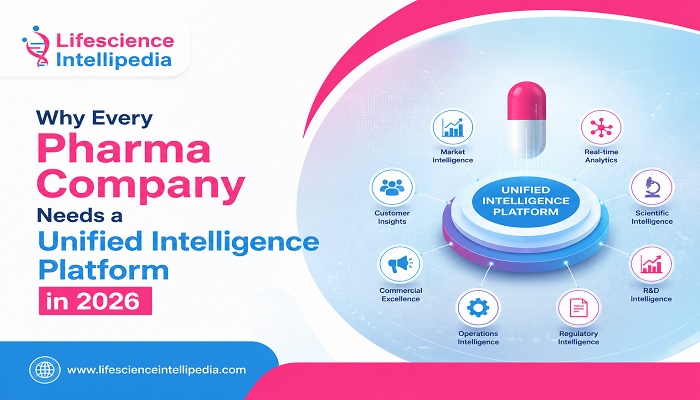
Market Research and Database Intelligence are essential in reducing risks involved with pharma investments.
Pharmaceutical is one of the most research intensive industry sectors and most risky in the entire world. APIs are the result of a significant investment of billions of dollars by companies, including clinical trials, obtaining regulatory approval, and creating commercialization plans. But, many pharmaceutical projects fall even after so much investment due to lack of market understanding, inaccurate forecasting, regulatory hurdles, and competition.
Imagine that Market Intelligence and Database Intelligence are of prime importance here. The applications of data science in modern pharmaceuticals companies are being increasingly used to make informed investment decisions in market research, competitive intelligence platforms, and structured pharma databases, helping to minimize uncertainty and improve decision making.
Database intelligence and market research enables pharma companies to discover hotspots, stay ahead of the competition, understand supplier risk, digest regulatory updates, and make more informed market forecasts.
The high-risk nature of Pharma Investments
There are several uncertainties involved in pharmaceutical investments, which can affect the profitability of the business and its long-term growth.
High R&D Costs
The research, testing, manufacture and compliance time and resources required for developing a pharmaceutical product are extremely large. It can take years and millions of dollars to clinically test a product and get it to commercialization.
Regulatory Challenges
Pharmaceutical markets in the world are very regulated. The risk of companies due to delays in approvals, evolving compliance requirements or documentation problems.
API Supply Chain Risks
Another key issue is API sourcing. Businesses need to find trusted manufacturers, assess supplier quality, and keep an eye on geopolitical or market events that can impact raw material availability.
Market Competition
Pharmaceutical companies are in a competitive business. A variety of factors can affect revenue projections, such as generic drug manufacturers, patent expiration, biosimilars and pricing pressure.
These challenges make it crucial for pharmaceutical companies to have accurate market intelligence and data-driven investment planning.
How Market Intelligence and Market Research Apply to Your Business
Pharma firms use market intelligence and market research for grasping the market situation prior to making high stakes investments.
Conventional market research involves gathering and examining information in the industry, via surveys, reports, and competitor analysis. Market intelligence takes it one step further, giving ongoing real-time information on market trends, competitor activity, pricing, supplier activity and regulatory movements.
This intelligence enables companies to:
- Identify emerging opportunities
- Evaluate market demand
- Assess competition
- Forecast commercial potential
- Minimise investment risks
When entering a new API market, a pharmaceutical company may consider evaluating:
- Manufacturer capabilities
- Import-export trends
- Competitor strategies
- Regulatory approvals
This enables companies to fund investments with reduced risk exposure and make smarter decisions.
How Database Intelligence Supports Better Decisions
Database intelligence has emerged as one of the key components of pharmaceutical market research and strategic planning.
Pharma intelligence databases offer them structured information on:
- API manufacturers,
- Clinical trials,
- Licensing deals,
- Regulatory filings,
- Supplier intelligence,
- Competitive benchmarking.
The databases enable businesses to retrieve vast amounts of data about the industry in a timely and efficient manner.
API and Manufacturer Intelligence
API landscape insights can assist companies in identifying:
- Active manufacturers
- Supplier capabilities
- Production trends
- Sourcing opportunities
This is very significant for procurement and strategic sourcing professionals.
Clinical Trial Intelligence
Businesses can use clinical trial databases to keep track of:
- Drug pipelines
- Therapeutic areas
- Trial phases
- Competitor developments
This intelligence can be used in investment planning and in partnership opportunities.
Competitive Intelligence
Additionally, database intelligence can support pharmaceutical companies with the tracking of competitor activity, such as:
- Product launches
- Patent activity
- Pricing changes
The strategies include the development of and market expansion,
How Data Science for Market Research Improves Pharma Investments
Pharma companies are changing the way they approach market research and investment risk through data science.
Businesses can predict using predictive analytics and advanced data models:
- Market demand
- Picing trends
- Competitor movement
- Commercialization potential
Predictive Market Forecasting
Data science can be used to analyse past and current market trends and predict future trends. This will facilitate investment planning and minimize the risk of entering into unprofitable markets.
AI-Driven Competitive Intelligence
These AI tools can analyze a wealth of market data and identify trends that are not visible in traditional research.
AI-powered analytics can detect, for example:
- Competitor expansion activity
- Changes in sourcing patterns
- Emerging therapeutic trends
- Therapeutic trends
Better Risk Assessment
Data science models enable organizations to assess the risks of commercial and operation before they invest in manufacturing, licensing or a product launch.
This enables pharmaceutical companies to make informed decisions rather thanguessing.
Real-life applications in Pharma Investments.
Market intelligence and database intelligence are utilised by pharmaceutical companies in multiple business operations.
API Opportunity Analysis
Businesses typically study the demand for APIs, pricing trends and the landscape of API manufacturers prior to investing in production or sourcing APIs.
Generic Drug Market Entry
Businesses assess before introducing generic drugs:
- Patent expirations
- Market competition
- Pricing pressure
- Regulatory requirements
Determine the Suitability of Licensing And/or Partnership Evaluation
Licensing intelligence databases enable companies to find potential partners and to analyse the market value of a product or molecule.
Supplier Qualification
Supplier intelligence systems enable companies to assess the reliability of manufacturers, compliance and sourcing risk.
Why Database Intelligence Creates Competitive Advantage
Database Intelligence is a key component of implementing a competitive advantage.Database Intelligence is a key element in achieving a competitive advantage.
Structured market intelligence systems offer several benefits to pharmaceutical companies.
They can:
- Respond faster to market changes
- Identify profitable opportunities earlier
- Reduce sourcing risks
- Improve strategic planning
- Strengthen competitive positioning
- Strengthen and improve competitive position.
Data-driven decision making is critical to the success of companies in a highly competitive and regulated industry.
How Lifescience Intellipedia Supports Pharma Intelligence
Pharmaceutical and chemical companies can benefit from Lifescience Intellipedia in the following ways:
- Market research services
- Pharma database services
- API landscape insights
- Competitive intelligence
- Supplier intelligence
- Regulatory intelligence solutions
Their intelligence platforms provide businesses with structured industry data, which they can use to inform strategic decision-making, sourcing analysis, and market forecast.
This combination of market intelligence and database-driven analytics helps pharmaceutical companies to better plan their businesses and diminish investment uncertainty.
Conclusion
The investments in pharmaceuticals come with the risk of substantial financial, operational and regulatory costs. Those firms that do not adopt new research approaches may not be able to adapt to new market and competitive conditions as quickly.
Market intelligence, database intelligence and data science for market research assist pharmaceutical firms in making informed investments based upon structured insights from the industry and predictive analytics.